Brand
Durand Ah-So Wine Opener Explained
The Durand Ah-So wine opener is a hybrid tool: it combines a traditional corkscrew helix with two-prong Ah-So blades. That dual mechanism is why sommeliers reach for it when opening bottles 30+ years old with corks too fragile for any single tool alone.
What the Durand Ah-So Wine Opener Is
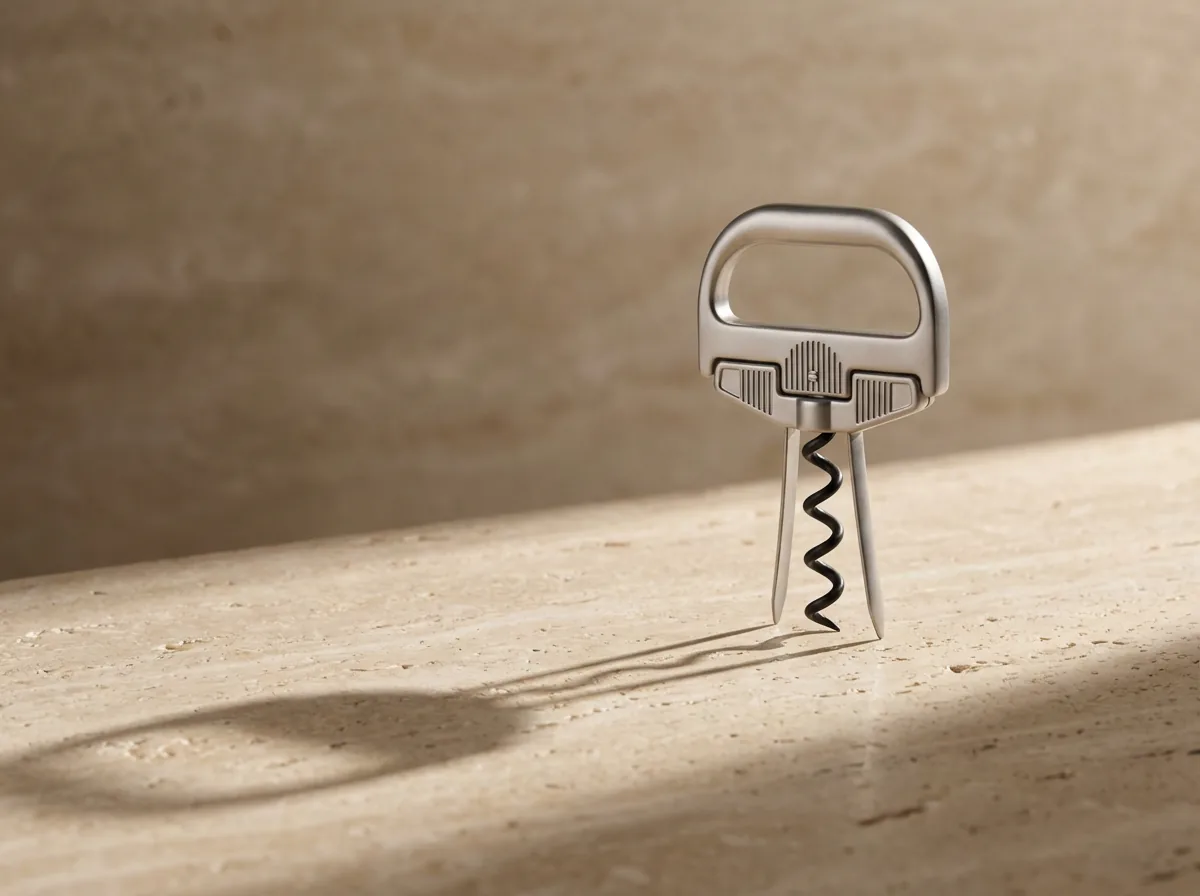
The Durand Ah-So wine opener is a hybrid cork extraction tool. Unlike a standard Ah-So that uses only two prongs, the Durand combines a traditional wine key corkscrew helix with two flat Ah-So blades. Both components work simultaneously: the helix is threaded into the cork's center while the two prongs slide down its outside, giving the cork two independent anchor points before extraction begins.
This dual-mechanism design is the Durand's entire reason for existing. For corks under 20 years old, a standard Ah-So or corkscrew handles the job fine. For corks 25–40+ years old that have dried out, shrunk, or begun to crumble, a single-mechanism tool risks either pushing the cork in or pulling it apart. The Durand was invented specifically for those bottles.
Who Invented the Durand and Why
The Durand was invented by Mark Taylor, an American wine collector who became frustrated breaking old Bordeaux corks with conventional tools. After losing the cork on several irreplaceable bottles, he developed a prototype that married the two extraction methods — and the Durand was born.
It is manufactured in the United States from surgical-grade stainless steel. That material choice matters: the tolerances required to make two prongs slide cleanly past a cork that may be only millimeters from disintegrating demand metal that holds its shape under load.
How the Durand Ah-So Works
Step one: thread the corkscrew helix into the center of the cork, exactly as you would with a standard wine key. Do not fully extract — stop when the helix has good purchase but the cork has not moved. Step two: slide the longer Ah-So prong between the cork and bottle neck on one side, then the shorter prong on the opposite side. Rock each prong gently downward until both are fully seated alongside the cork.
Now turn the combined handle slowly while pulling upward. The helix prevents the cork from tearing in the middle; the prongs prevent it from folding outward at the edges. The cork emerges as a single intact piece — which is the whole point when you have a 1982 Pétrus in your hands.
Why the Durand Commands $140–$170
The price reflects precision manufacturing and a narrow use case. The prong geometry must be exact — too wide and they cannot slide past tight-necked old bottles; too narrow and they fail to grip a shrunken cork. The corkscrew pitch must match the prong depth so both mechanisms engage simultaneously. These tolerances cost money to maintain consistently.
The Durand is also a lifetime purchase. Sommeliers and collectors report using the same Durand for decades without replacement. At $140–$170 amortized over years of protecting expensive bottles, the cost-per-use arithmetic looks very different than it does at the point of purchase.
When the Durand Ah-So Is the Right Tool
Use the Durand when the bottle is 25+ years old and you cannot afford to lose the cork. Burgundies and Bordeaux from the 1980s and earlier, vintage Port, older Barolo, and any bottle that has been stored imperfectly are the primary candidates. If the cork feels soft, looks discolored, or has already receded slightly below the capsule, reach for the Durand.
For wines under 20 years old, a standard Ah-So like the SOMM DIGI ($15–$20) handles extraction without the additional cost. The Durand's dual mechanism adds value only when a cork is genuinely at risk of structural failure — which is uncommon in younger bottles.
The Durand vs a Standard Ah-So: The Real Difference
A standard Ah-So (including the SOMM DIGI) uses only two prongs — no corkscrew. It extracts corks by compressing them from the outside. This works well for corks that retain their original diameter and elasticity. A cork that has dried out and shrunk has less to compress against, and the prongs risk slipping. A cork that has become soft may fold inward rather than lift out cleanly.
The Durand's corkscrew solves both problems. Even if the prongs cannot get a perfect external grip, the helix anchored in the center keeps the cork from collapsing. The two mechanisms compensate for each other's weaknesses — which is exactly why the tool was designed.
Who Uses the Durand Ah-So
Professional sommeliers at fine dining restaurants and wine auction houses are the Durand's core users. When a bottle of aged Burgundy or vintage Barolo is being opened tableside, the cost of cork failure — both the wine and the embarrassment — justifies the tool's price immediately.
Serious private collectors who open 20+ year old bottles regularly make up the other audience. If you are pulling a bottle from a cellar every few months, the Durand is a tool you buy once and use for the rest of your collecting life.
Where to Buy the Durand Ah-So Wine Opener
The Durand is available on Amazon. Current price is typically $140–$170 depending on the listing. It is not widely stocked in retail wine shops, so Amazon is the most reliable source.
There are no meaningful alternatives at the same price point that replicate the dual-mechanism design. Cheaper Ah-So openers at $10–$20 use only prongs. If you want the combined helix-plus-Ah-So design, the Durand is the option.
Compare Ah-So Wine Openers
Related Articles
SOMM DIGI Ah-So Wine Opener Explained
What the SOMM DIGI is, its design focus, and who it is for.
SOMM DIGI vs Durand Ah-So: Which Wine Opener Should You Buy?
SOMM DIGI ($17) is a pure two-prong Ah-So. The Durand ($150) combines a corkscrew helix with two prongs. Both open aged wine — but they are not the same tool, and the right choice depends entirely on how old your bottles are.
Why So Many 'New' Durand-Style Wine Openers Just Appeared on Amazon
A wave of $50–$75 hybrid two-prong-plus-corkscrew openers has shown up on Amazon in the last couple of years, all shaped like the Durand. Here's what that design actually is, why it's suddenly everywhere, and what to weigh before you buy one.