Problem
Why Old Corks Break — and How an Ah-So Saves the Bottle
Cork is tree bark. After 20–30 years, it dries out, shrinks, and loses the elasticity that makes corkscrew extraction work. That is why a corkscrew that works perfectly on a 2018 Cabernet will shred a 1985 Burgundy. Here is the science and the solution.
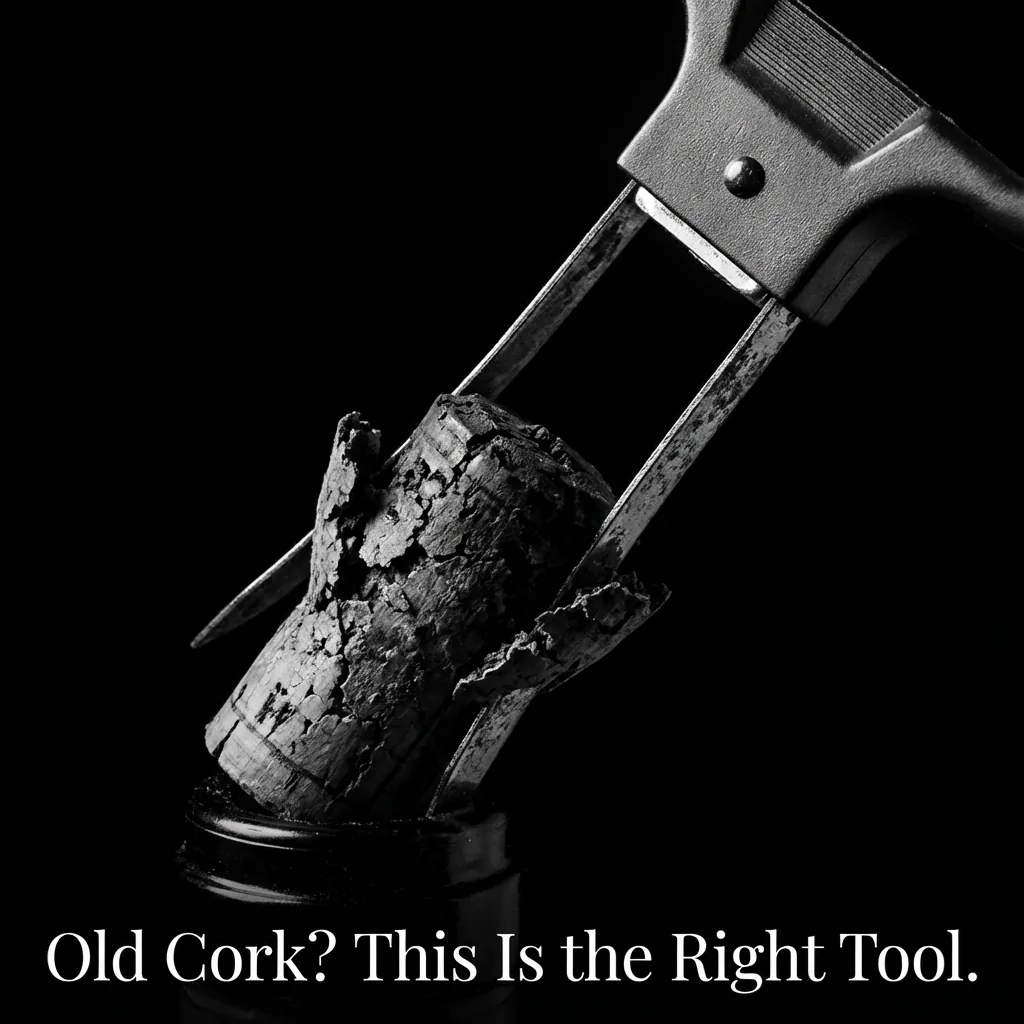
What Cork Actually Is
Natural cork is harvested from the bark of the cork oak (Quercus suber). Under a microscope, it looks like a honeycomb — millions of tiny air-filled cells bonded together. Each cell is coated with suberin, a waxy substance that makes cork compressible, elastic, and resistant to liquid absorption.
When a cork is inserted into a bottle, those cells compress. When you extract it, they try to expand back. In a young cork, this works perfectly — the cork seals the bottle while being extractable with normal force. In a 30-year-old cork, the chemistry changes.
What Happens to Cork Over 20–30 Years
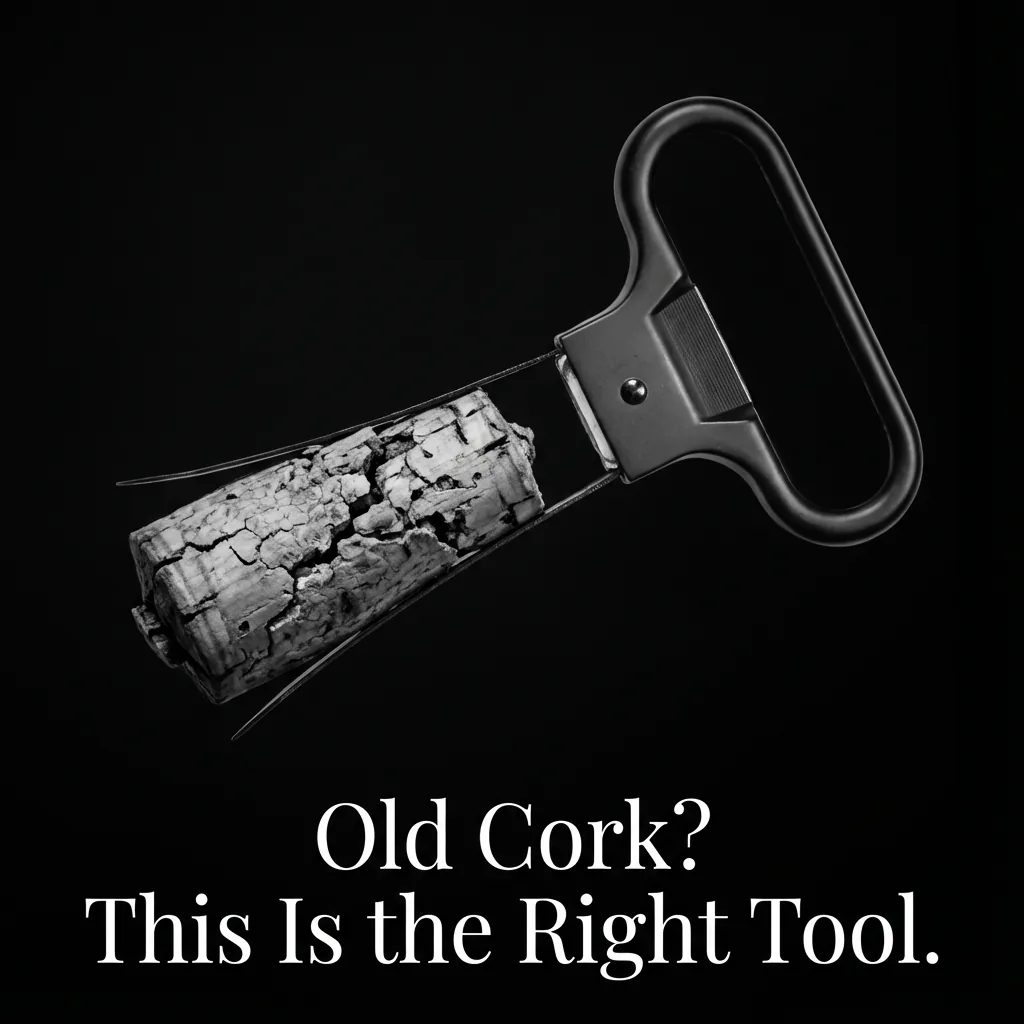
Over time, the suberin coating breaks down. The cells lose their waxy seal, dry out, and begin to shrink. A cork that was originally 24mm in diameter may shrink to 22mm after 30 years in a poorly maintained cellar. Even in ideal storage, some shrinkage and drying occurs after 25 years.
The cellular structure becomes brittle rather than elastic. Instead of compressing under load and rebounding, old cork cells crack and crumble. This is why you can see fissures running along old corks — the cellular walls have fractured. A cork in this state cannot handle the shear stress a corkscrew worm creates as it threads through the material.
Why a Corkscrew Destroys Old Corks
A corkscrew works by anchoring inside the cork and using that internal grip to pull it free. The worm threads between cork cells and relies on the friction and compression of those cells to hold. In a young, elastic cork, the cells deform around the worm and grip it tightly.
In a dry, brittle old cork, the cells do not deform — they shatter. The worm passes through them without gripping. You can feel this as the corkscrew spinning freely with no resistance, or worse, the top half of the cork coming out while the bottom half stays in the bottle. Once the cork breaks at mid-height, you are in crisis mode: the remaining piece is now flush with the bottle interior and cannot be reached from above.
How the Ah-So Bypasses the Problem
The Ah-So never touches the inside of the cork. Its two prongs slide down the exterior — between the cork's outer surface and the glass. The cork is gripped by compression from the outside, not from internal anchorage.
This means the internal cellular structure is irrelevant. Even if the cork has become so dry that the cells have completely lost integrity, the Ah-So prongs can still compress it from the outside and extract it. The cork's exterior surface only needs to hold together, which it typically does even when the interior is degraded.
When the Ah-So Still Struggles: Truly Destroyed Corks
There is a threshold beyond which no tool fully works. If a cork has dried to the point where it has visibly crumbled at the top, or if it has been pushed partially into the bottle by a previous extraction attempt, the Ah-So prongs may not be able to get full purchase. Inserting the prongs into a fully crumbled cork can split it further.
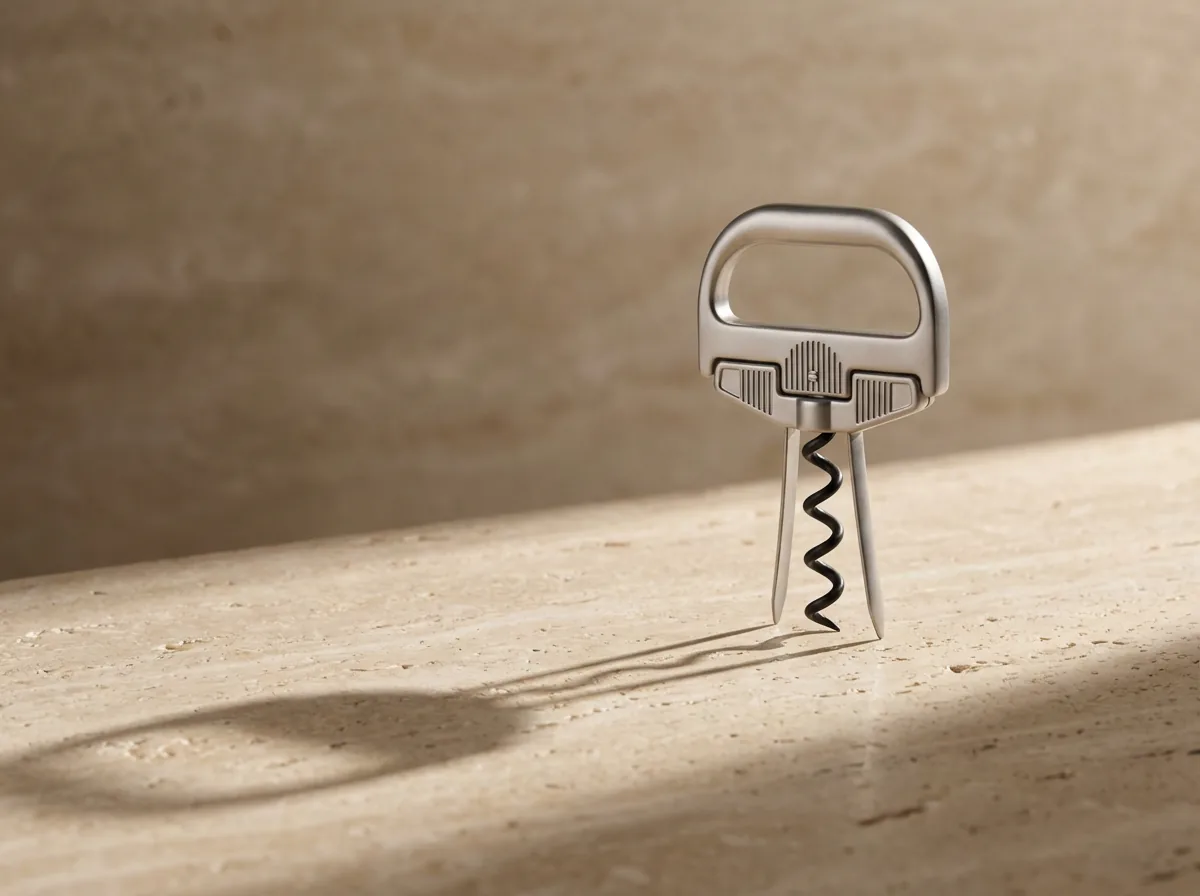
In these cases, the Durand's combined corkscrew-plus-prong design is the better tool — the helix pins the center while the prongs grip the outside, distributing the extraction force across more of the cork's remaining structure. For the absolute worst corks — ones that have literally turned to powder — the answer is a wine needle (Coravin) through the cork, or accepting that some cork debris will enter the bottle and using a fine mesh strainer when pouring.
Storage Conditions and Cork Lifespan
Cork deterioration is heavily influenced by storage. A bottle stored horizontally at 55°F (13°C) and 70% humidity will have a significantly healthier cork at 25 years than one stored upright in a warm kitchen. Horizontal storage keeps the cork in contact with the wine, preventing it from drying from the interior. Humidity above 60% prevents drying from the exterior.
This is why two bottles of the same wine from the same case can have wildly different cork conditions at the same age — one bottle tipped upright, one kept horizontal. The Ah-So and the Durand exist precisely because perfect storage for every bottle is not always possible.
The Practical Takeaway
Any bottle over 20 years old deserves an Ah-So. Not because a corkscrew will definitely fail, but because if it does fail, the cost is a bottle you have been waiting years to open. The SOMM DIGI at $17 is cheap insurance for every aged wine in your cellar.
For bottles over 30 years from before 1990, or any bottle where you have reason to suspect poor storage, the Durand's dual mechanism gives you the best chance of a clean extraction. Either way, the answer to a fragile cork is never a sharper corkscrew — it is bypassing the internal structure entirely.
Compare Ah-So Wine Openers
Related Articles
How to Use an Ah-So Wine Opener Correctly (Sommelier Method)
Four steps: insert, rock, twist, pull. The Ah-So technique takes 15 minutes to learn and becomes automatic after a dozen uses. Here is the correct method, the common mistakes, and what to do when things go wrong.
SOMM DIGI vs Durand Ah-So: Which Wine Opener Should You Buy?
SOMM DIGI ($17) is a pure two-prong Ah-So. The Durand ($150) combines a corkscrew helix with two prongs. Both open aged wine — but they are not the same tool, and the right choice depends entirely on how old your bottles are.
Why So Many 'New' Durand-Style Wine Openers Just Appeared on Amazon
A wave of $50–$75 hybrid two-prong-plus-corkscrew openers has shown up on Amazon in the last couple of years, all shaped like the Durand. Here's what that design actually is, why it's suddenly everywhere, and what to weigh before you buy one.