Core
How to Use an Ah-So Wine Opener Correctly (Sommelier Method)
Four steps: insert, rock, twist, pull. The Ah-So technique takes 15 minutes to learn and becomes automatic after a dozen uses. Here is the correct method, the common mistakes, and what to do when things go wrong.
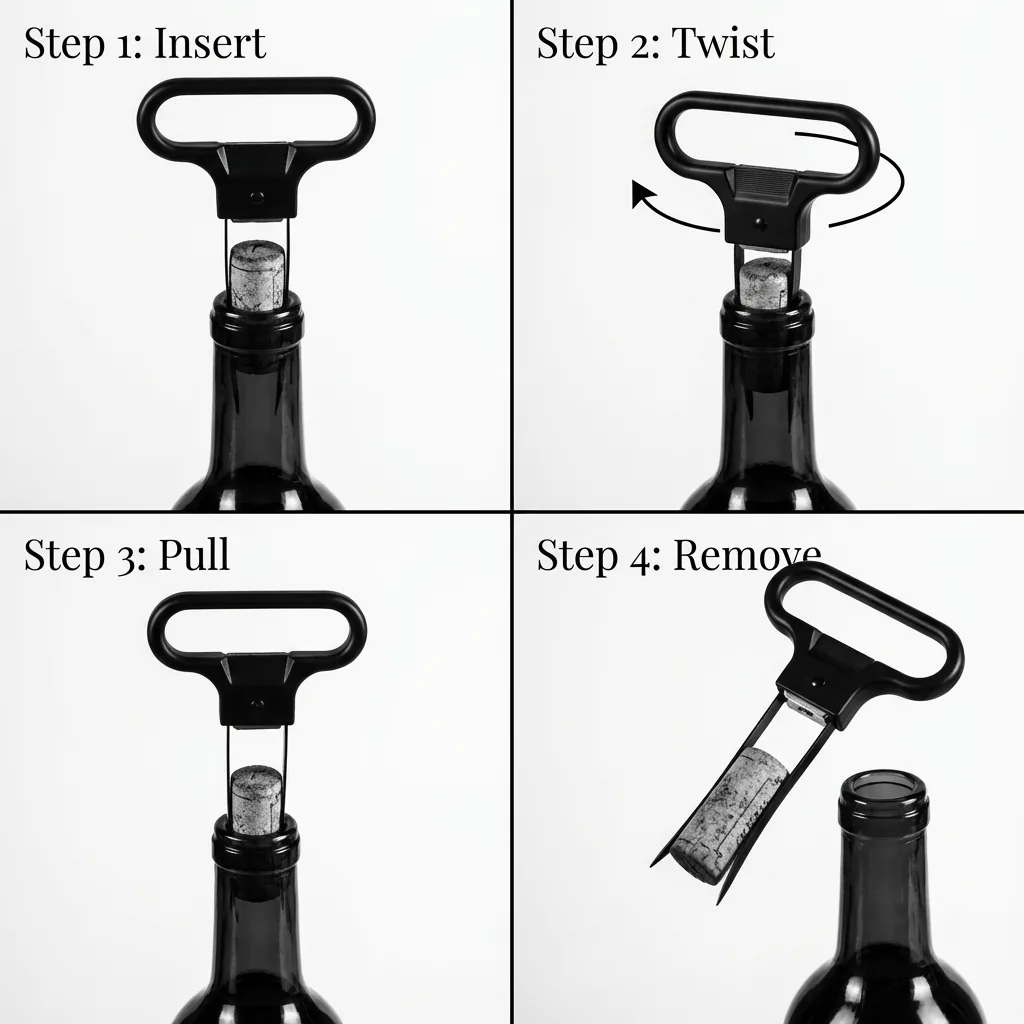
Before You Start: Read the Cork
Remove the foil capsule completely — cut below the lip so it does not interfere with prong entry. Then look at the top of the cork. A healthy cork is flat, slightly moist, and flush with the bottle rim. A cork that has receded, cracked at the top, or dried out completely will need slower, more careful work.
Stand the bottle on a stable surface. You need both hands free. Brace the bottle against your body if the surface is unsteady. Never try to hold the bottle in the air while inserting — any slip will push the cork in.
Step 1 — Insert the Longer Prong
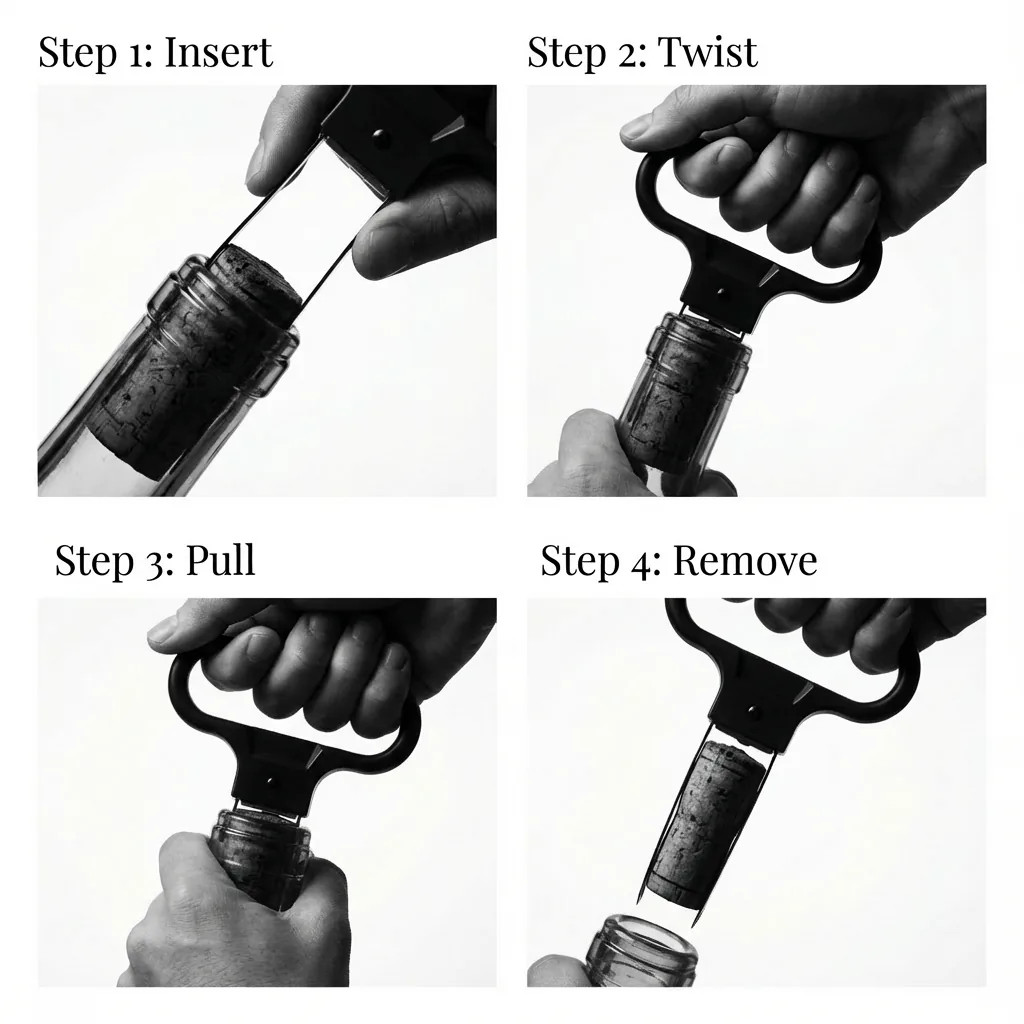
Hold the Ah-So handle so the longer prong points down. Place the tip of the longer prong in the gap between the cork and the bottle neck — not into the cork, and not against the center of the glass. You are looking for the seam where cork meets glass.
Apply gentle downward pressure with a slight rocking motion — think of it as a slow seesaw, not side-to-side. Work the prong deeper a few millimeters at a time. If you feel resistance, ease back slightly and readjust the angle. Never force it. Forcing bends the prong or drives the cork into the bottle.
Step 2 — Insert the Shorter Prong
Once the longer prong is inserted about halfway, start the shorter prong on the directly opposite side of the cork. Use the same rocking motion. Alternate pressure between the two prongs — longer prong deeper, then shorter prong deeper — until the handle nearly touches the bottle rim.
At this point both prongs run the full length of the cork, one on each side. The cork is now gripped between them. You should feel the resistance change slightly — the prongs are compressing the cork and gripping it from outside.
Step 3 — Twist and Pull
This is where most beginners go wrong. Do not pull straight up without twisting. Grip the handle firmly and rotate it in one direction — either clockwise or counterclockwise, whichever feels natural — while simultaneously applying steady upward pressure.
The rotation is what tightens the prong grip on the cork. Without it, the prongs can slip and the cork stays in the bottle. With it, friction increases and the cork releases cleanly. Pull slowly and evenly. The whole extraction from full insertion to cork out should take five to ten seconds.
Step 4 — Release the Cork
Once the cork is fully extracted, it will be gripped between the two prongs. To release it, gently squeeze the prongs toward each other while sliding the cork off — or simply twist in the opposite direction and the cork will release.
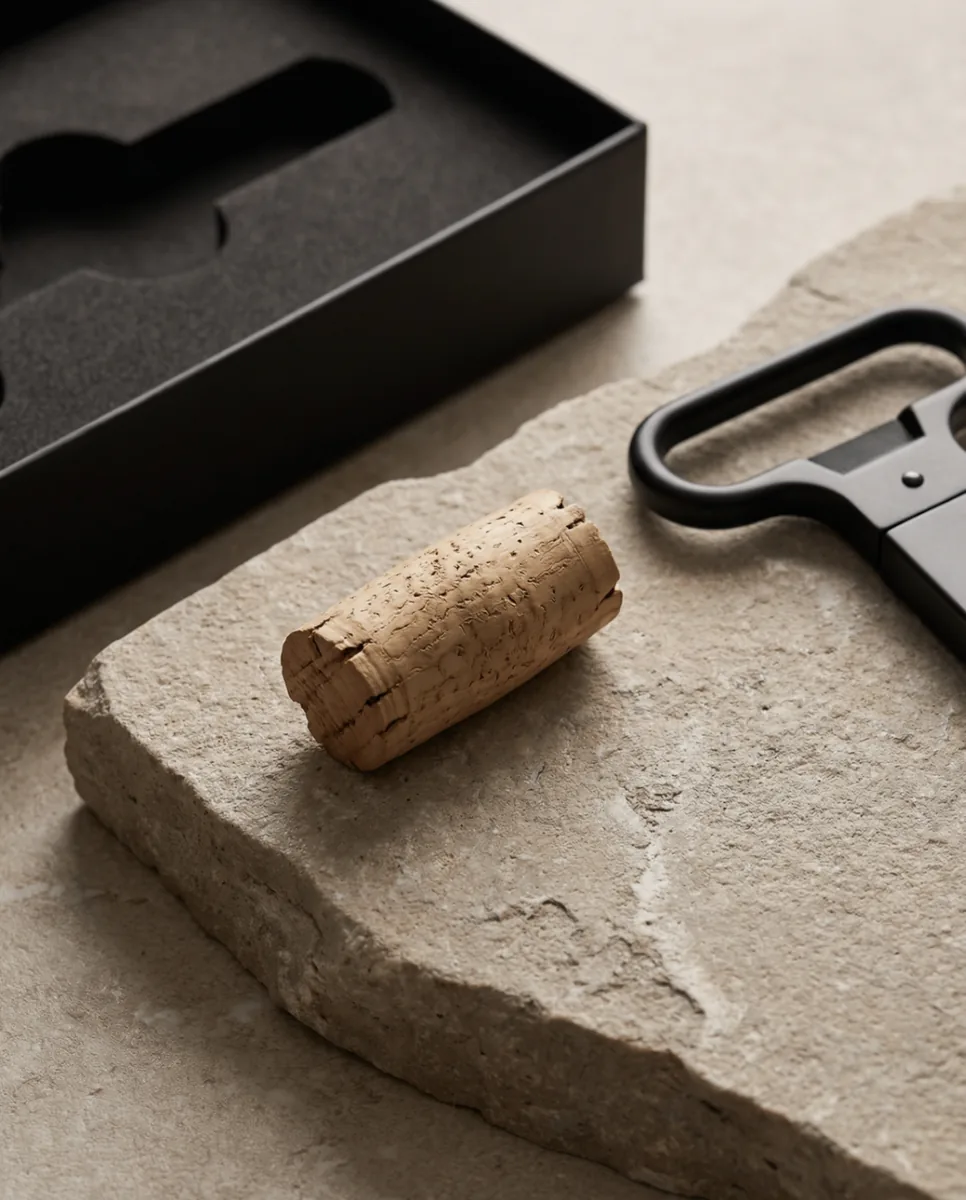
Inspect the cork. A cleanly extracted cork shows prong marks on two opposite sides but is otherwise intact. This is exactly what you want — it means the tool worked correctly. Set the cork aside for inspection or to reinsert later if needed.
What to Do When the Cork Is Extremely Old or Fragile
For bottles over 30 years old with corks that show cracking or excessive dryness, slow down by half. Insert each prong one millimeter at a time. If you feel the cork starting to compress inward rather than grip, stop. Back the prong out slightly, rotate the bottle 90 degrees, and try to find a better entry point.
On very fragile corks, some surface crumbling is normal and acceptable. The goal is not a perfect cork — it is getting the wine out without pushing debris into the bottle. If a small piece breaks away, tip the bottle gently to let it settle at the bottom and decant through a fine mesh strainer.
How Long Does It Take to Learn?
Expect your first two or three attempts to feel awkward. The rocking insertion is counterintuitive — most people try to push straight down first. Once the motion clicks, usually around the fourth or fifth use, it becomes fast and natural.
Practice on bottles from the late 1990s or early 2000s before attempting anything irreplaceable. Corks from that era are old enough to benefit from Ah-So technique but not so fragile that a learner's mistake ruins the bottle.
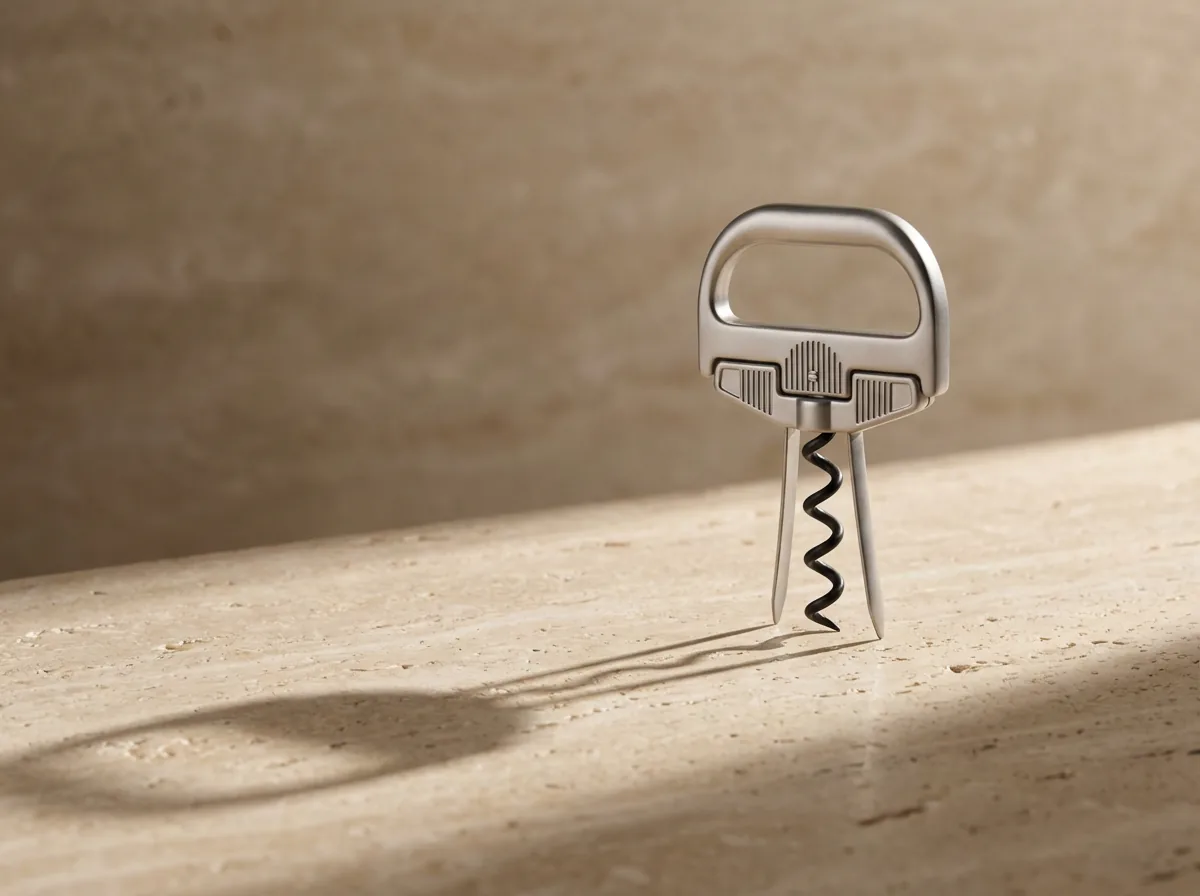
Compare Ah-So Wine Openers
Related Articles
Common Mistakes When Using an Ah-So Wine Opener
Avoid these errors for successful cork extraction every time.
How Does an Ah-So Wine Opener Work?
The mechanics behind two-prong cork extraction explained step by step.
Why Old Corks Break — and How an Ah-So Saves the Bottle
Cork is tree bark. After 20–30 years, it dries out, shrinks, and loses the elasticity that makes corkscrew extraction work. That is why a corkscrew that works perfectly on a 2018 Cabernet will shred a 1985 Burgundy. Here is the science and the solution.