Market Watch
Why So Many 'New' Durand-Style Wine Openers Just Appeared on Amazon
A wave of $50–$75 hybrid two-prong-plus-corkscrew openers has shown up on Amazon in the last couple of years, all shaped like the Durand. Here's what that design actually is, why it's suddenly everywhere, and what to weigh before you buy one.
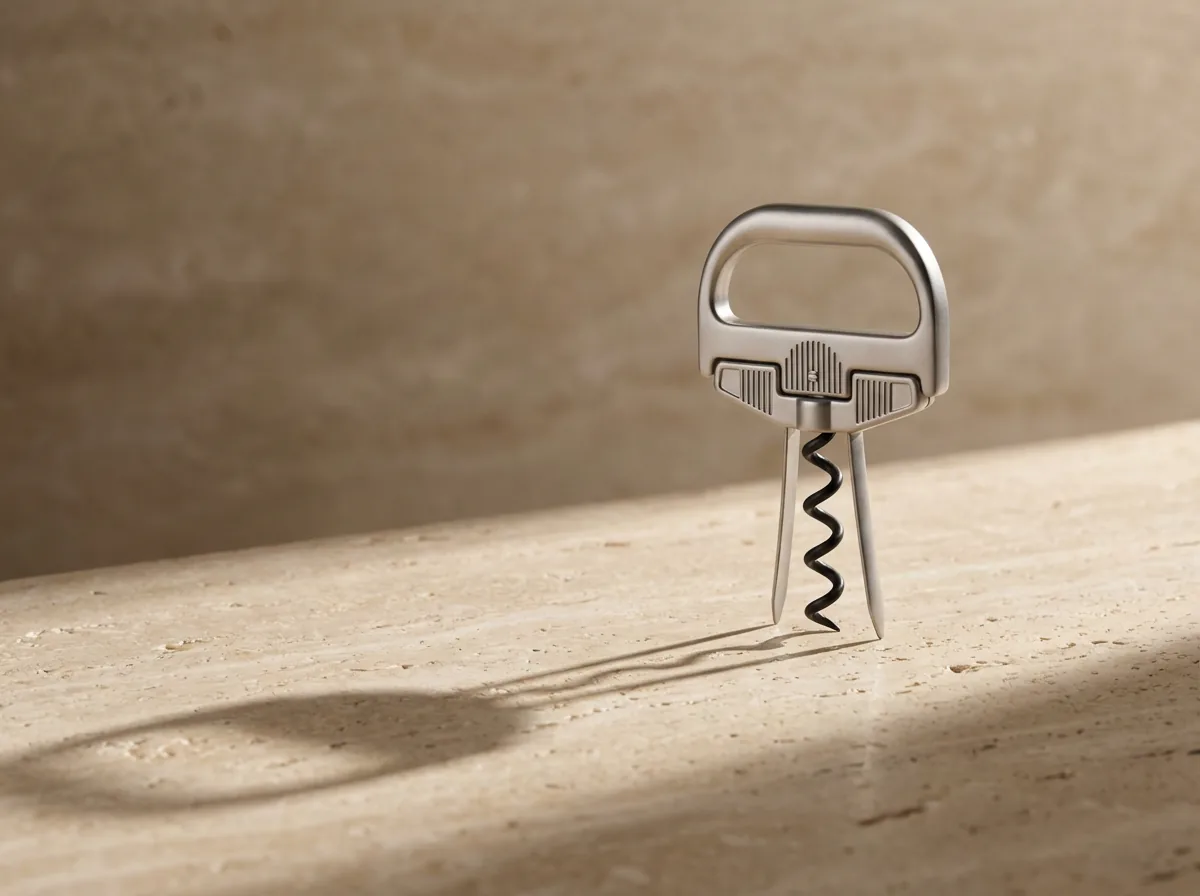
What 'Durand Style' Actually Means
The Durand was the tool that combined two things that used to be separate: a corkscrew worm threaded into the center of the cork, and two thin Ah-So prongs sliding down the outside. On its own, a corkscrew can shred a fragile old cork. On its own, a two-prong Ah-So can lose its grip on a cork that has already started to crumble. The Durand puts both to work on the same cork at once — the worm anchors the center while the prongs control the outside — which is why it became the tool sommeliers reach for on the bottles they genuinely cannot afford to lose.
When we say 'Durand style' in this article, that's what we mean: this specific hybrid mechanism, not any one company. Durand was first to build it and bring it to market, which is why the name became shorthand for the whole design — the way people say 'Ah-So' for any two-prong cork puller regardless of who made it.
Why the Design Earned Its Reputation
This isn't hype — it's a real mechanical answer to a real problem. Corks over 25–30 years old dry out, shrink, and lose the elasticity that gives a standard cork puller something to grip. Every sommelier who has worked a serious cellar has a story about a cork that fell apart mid-extraction. The two-mechanism approach is what makes those bottles survivable, and over roughly the last five years that reputation has built into real, visible demand — Durand's own listing has climbed toward the 500-plus review mark, which for a $150 specialty tool is a meaningful track record.
That track record matters for what comes next. A proven design with growing demand and a premium price is exactly the kind of product that invites imitation — not because anything improper is happening, but because that's how most competitive product categories work once a design is proven.
The New Wave of Listings on Amazon
In the past couple of years, a growing number of listings have appeared using the same two-prong-plus-corkscrew silhouette, sold under storefront names most buyers have never heard of, priced well under the original — commonly somewhere in the $50–$75 range against the Durand's $140–$175. Several of these are sponsored placements sitting directly alongside searches for the original design, which tells you the category itself is now competitive, not just the one brand that started it.
This pattern isn't unique to wine tools — it's what happens across most Amazon categories once a design proves people will pay for it. What's worth pointing out honestly: SOMM DIGI's own Ah-So is also manufactured overseas, the same broad supply chain many of these newer listings likely draw from. The difference isn't where a tool is made — it's whether anyone has vetted the result and whether it has a track record behind it.
What a Handful of These Listings Actually Show
Looking at a few real examples side by side is more useful than talking about the trend in the abstract. One hybrid listing at $64.99 shows a 4.8-star rating from 27 ratings, '100+ bought in the past month,' and a stock warning — a strong early showing, but 27 ratings is a fraction of the review history the original has built. A similarly shaped listing at $54.99 shows 4.5 stars from 20 ratings. A third, a '3-in-1' version that adds a beer-bottle opener to the same silhouette, sits at $54.99 with 3.6 stars from 21 ratings and a Kitchen & Dining rank in the hundreds of thousands — a very different picture from the first two despite looking nearly identical in photos.
None of that tells you whether any specific one of these will actually perform on a fragile 1978 Bordeaux cork — we haven't put one through that test, and we're not going to claim we have. What it does tell you is that 'looks like a Durand in the photo' and 'has a Durand's track record' are two different things, and right now most of these listings only have the first.
What's Actually Different at Each Price Point
Some things are visible before you buy: price, star rating, how many ratings back that star rating up, how long the listing has existed, and whether the seller has a history beyond this one product. Other things are not visible until you're holding the tool in your hand — how well the worm is tempered, whether the prong spacing is actually cut to fit a real bottle neck, whether the hinge or pivot (on models that have one) holds its tolerance after repeated use. That second set is exactly what a track record like Durand's five years and 500-plus reviews is standing in for.
A $50–$75 price tag isn't automatically a red flag, and a $140–$175 price tag isn't automatically justified — but a listing with 20 reviews from the last few months is asking you to trust it on faith in a way a listing with hundreds of reviews built up over years is not.
What This Means If You're the One Buying
We're not going to tell you which of these is the best one to buy, because we haven't tested most of them and it would be dishonest to pretend otherwise. What we'd actually ask, as a sommelier, is what's in the bottle you're planning to open with it. If it's something replaceable, a newer listing at a lower price is a reasonable way to try the hybrid mechanism without the full outlay. If it's a bottle you genuinely cannot afford to lose — the one cork you get one shot at — that's the moment a proven track record stops being a nice-to-have and starts being the entire point of paying more.
That's the honest version of this trend: not a scandal, not a scam, just a proven design getting copied the way proven designs always do, at a moment where most of the copies haven't had time to prove themselves yet. Know what you're actually buying, and decide accordingly.
— Alper Billik, Advanced Sommelier, by Court of Master Sommeliers
Compare Ah-So Wine Openers
Related Articles
Durand Ah-So Wine Opener Explained
The Durand Ah-So wine opener is a hybrid tool: it combines a traditional corkscrew helix with two-prong Ah-So blades. That dual mechanism is why sommeliers reach for it when opening bottles 30+ years old with corks too fragile for any single tool alone.
Best Durand Wine Opener Alternative: SOMM DIGI Ah-So (2026)
The Durand is $150. The SOMM DIGI is $17 and uses the same two-prong extraction principle. For most wine collectors, the SOMM DIGI does everything they actually need — here is exactly when that is true and when it is not.
Why Old Corks Break — and How an Ah-So Saves the Bottle
Cork is tree bark. After 20–30 years, it dries out, shrinks, and loses the elasticity that makes corkscrew extraction work. That is why a corkscrew that works perfectly on a 2018 Cabernet will shred a 1985 Burgundy. Here is the science and the solution.